Med Spa Equipment Financing
Your next aesthetic device should fit your practice—not just your treatment room. Equipment Finance Academy helps independent med spa and aesthetic practice owners, physicians and first-location entrepreneurs explore equipment financing while preserving cash for staffing, training and daily operations.
Apply NowSouth End Capital referral pre-qualification. Subject to lender approval.
General equipment financing options
Financing from $30K to $5M, rates from 6.99%, and approvals in as fast as 4 hours. These are general program possibilities, not guaranteed terms or a promise for your practice. Availability, rate and approval timing depend on lender review. Approval is separate from funding.
Equipment for your aesthetic practice
Established single-location practices may add a device to expand an existing service, while a new location needs a coordinated equipment plan. Start with the treatments your appropriately licensed team can deliver and the devices your business can support.
- Multi-application aesthetic laser platforms
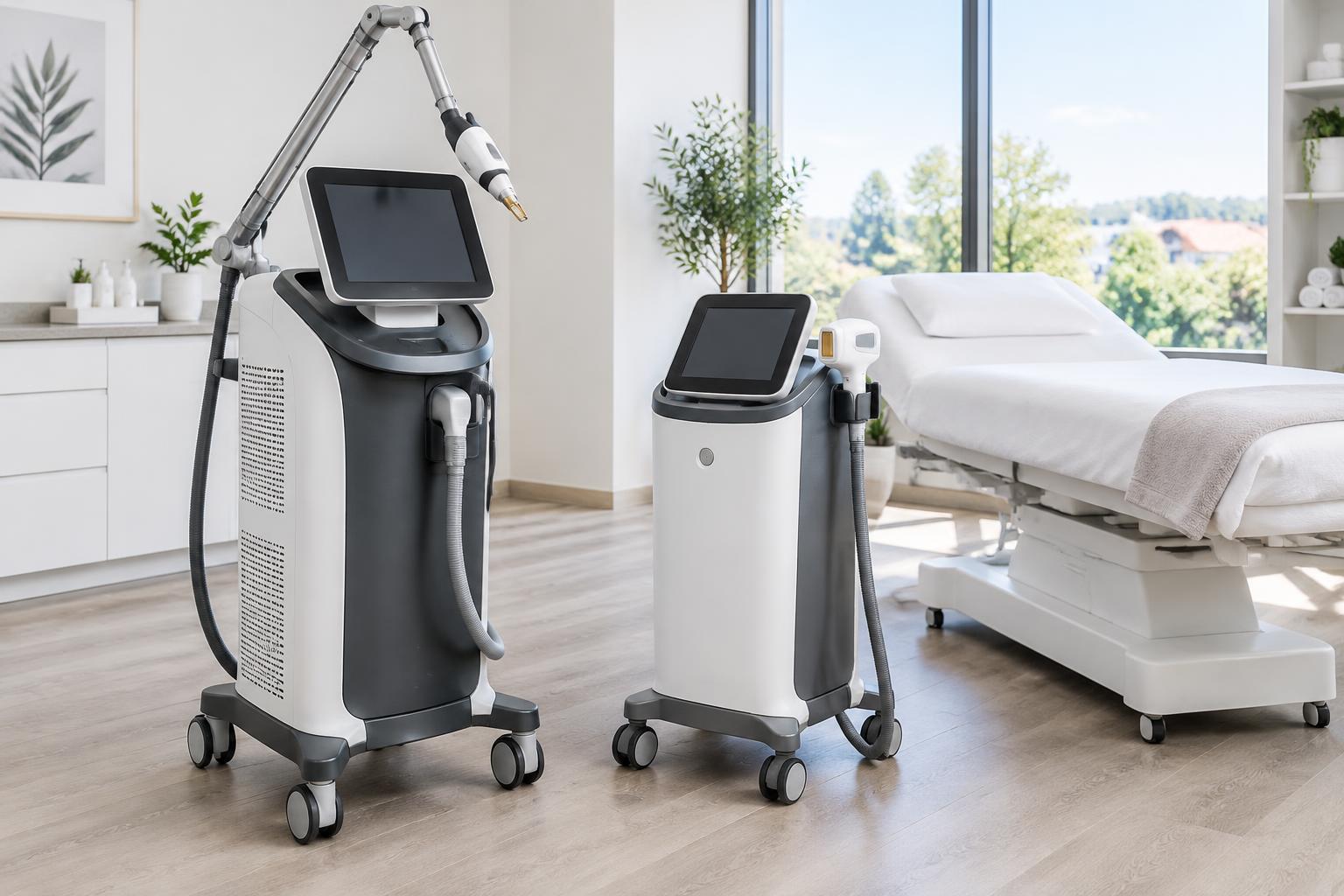
- Professional laser hair removal systems
- Non-invasive body contouring equipment
- IPL light-based systems
- RF skin tightening and related aesthetic devices
Device and launch planning budgets
Broad budgets supplied for this guide put laser platforms at $80,000–$250,000, body contouring devices at $100,000–$200,000 and IPL systems at $25,000–$80,000. A full equipment launch may run $250,000–$600,000; that is an equipment budget, not the entire cost of opening a practice.
Many device purchases fit the general $30K–$5M program range. An IPL unit priced at $25,000 falls below the $30K minimum on its own. Ask the lender about an actual eligible equipment package rather than assuming every device or bundled cost qualifies.
An honest expectation for startups
Newer practices should expect stronger credit requirements and a down payment, commonly 20–30% as a planning allowance—not a fixed lender rule. Established practices adding a device generally have the smoothest approval path when their cash flow and credit support repayment. Neither situation guarantees approval.
For a first location, explain the ownership team, professional experience, equipment quote and operating budget. Keep reserves for rent, payroll, insurance, training and the time it takes to build a patient base. The lender decides which records and upfront payment it needs.
Choose a purchase structure you can sustain
Compare a new device with a used or certified pre-owned alternative on warranty, service availability, training and all-in cost—not just the purchase price. Ensure any software, accessories and installation items are clearly identified in the quote.
A loan and lease may differ in ownership, total repayment and end-of-term obligations. Ask about fees, any buyout or balloon payment, early payoff and personal guarantees. Any tax treatment should be reviewed with your tax adviser.
Illustrative med spa financing case studies
These illustrative case studies describe hypothetical purchase decisions—not actual Equipment Finance Academy customers, funded transactions or testimonials. No rate, approval, funding timeline, revenue or treatment outcome is promised. Equipment and borrower eligibility, documentation, upfront payment and final terms are determined by the lender.
Hypothetical planning example
Opening a first med spa location
An experienced aesthetic professional is preparing a first location and wants to purchase a laser platform and an IPL system. The practice has no established operating history, so projected appointments cannot be treated as proven repayment capacity.
- Equipment plan
- Build an itemized equipment package around services the appropriately licensed team can provide. Compare the required accessories, installation, training and support with the opening budget. Keep rent deposits, payroll, insurance and working capital separate from the equipment quote.
- Financing considerations
- A startup request may require closer review of the owner's credit, professional experience, operating plan and available cash. Do not assume every launch expense is financeable or that combining devices makes the package eligible. Ask what upfront payment and documentation the lender requires before committing to a seller deposit.
- What to prepare
- Itemized device quotes and a list of included services
- Ownership and professional-experience information
- Operating budget with reserves for a slower-than-expected opening
- Decision checkpoint—not a reported outcome
- Proceed only if the written financing offer and remaining cash reserves support the launch without relying on immediate full appointment calendars. If they do not, consider phasing purchases rather than financing the entire device plan at once.
Hypothetical planning example
Adding a second hair removal system
An established practice is evaluating a second professional hair removal system because existing appointments compete for the same device. The owner wants more scheduling flexibility, not a financing plan dependent on an assumed surge in new patients.
- Equipment plan
- Compare a new diode or dual-wavelength system with a supported used alternative. Confirm the clinical team's assessment of intended use, required training, cooling system, handpieces and treatment-room needs.
- Financing considerations
- Use the practice's own appointment history and current cash flow to explain the purchase. Compare total repayment, fees, upfront cash and service costs in actual written offers. Adding capacity does not guarantee utilization, income or approval.
- What to prepare
- Exact model and seller quote, including handpieces and training
- Appointment-capacity records and staffing schedule
- Maintenance and downtime allowances in the operating budget
- Decision checkpoint—not a reported outcome
- Test whether repayment remains manageable when the new device is lightly utilized or temporarily unavailable. A second unit should address a documented capacity need rather than replace a cash reserve with speculative bookings.
Hypothetical planning example
Replacing an aging aesthetic laser platform
An established aesthetic practice is weighing another repair of an older platform against buying a replacement. The owner needs a reliable workflow for existing services and is not counting every optional treatment on a new console as immediate revenue.
- Equipment plan
- Compare current repair and service information with itemized replacement quotes. Identify which handpieces, software access and training are actually needed, and confirm intended use with the qualified clinical team.
- Financing considerations
- Compare financing offers for the exact equipment packages rather than advertised starting rates. Review ownership, any lease buyout or balloon obligation, early-payoff provisions and personal guarantees. Do not assume an existing financed unit can be traded in without settling its contract.
- What to prepare
- Repair history and current maintenance costs
- Replacement quotes with warranty and installation details
- Existing equipment payoff or lease obligations, if any
- Decision checkpoint—not a reported outcome
- Compare keeping, repairing and replacing the unit on full cost and operational needs. A replacement can still be unsuitable if debt obligations, training or service interruptions exceed the practice's budget.
Hypothetical planning example
Introducing a body contouring service
A practice has received patient inquiries about non-invasive body contouring and is considering a dedicated system. Inquiries are useful planning inputs, but they are not confirmed bookings or evidence of guaranteed profitability.
- Equipment plan
- Have the qualified clinical team assess intended use, patient-selection requirements and training. Obtain a quote listing the console, applicators, installation and warranty, and ask about consumables, software or per-treatment charges.
- Financing considerations
- Keep device repayment and ongoing treatment costs in the same operating plan, while checking which quoted items the lender will consider. Review the written offer against conservative utilization assumptions, including a period with no new-service revenue.
- What to prepare
- Current patient-inquiry information, without assuming conversion to bookings
- Complete device and recurring-cost quotes
- Staffing, room availability and training plan
- Decision checkpoint—not a reported outcome
- Delay the purchase if repayment depends on rapid adoption or excludes recurring device costs. Financing approval, if obtained, would not validate treatment effectiveness or the practice's authority to provide the service.
Hypothetical planning example
Choosing a certified pre-owned laser
A newer practice is comparing a reseller's certified pre-owned laser with a new system to reduce its acquisition budget. The CPO label alone does not establish manufacturer certification, device eligibility or easier lender approval.
- Equipment plan
- Request the exact serial number, inspection scope, service history and written warranty. Verify who performs repairs and whether software transfer, registration, activation, handpiece replacement or training costs are excluded from the price.
- Financing considerations
- Ask the lender to review the specific unit and seller before placing a non-refundable deposit. Equipment age, condition and support may affect available terms. A smaller quote does not necessarily produce a lower payment or total ownership cost.
- What to prepare
- Serial number, device age and service records
- Written certification scope, warranty and service arrangements
- Comparable new and CPO quotes including transfer and activation costs
- Decision checkpoint—not a reported outcome
- Choose based on verified support, full ownership cost and a sustainable written offer—not an assumed discount or approval shortcut. Walk away if required device records or reliable service access cannot be confirmed.
Frequently asked questions
Can a first-location med spa apply?
Yes, you can submit a referral pre-qualification request. Newer practices should expect closer review of credit, experience, business plans and upfront cash. Availability and down payment are lender decisions.
Does every IPL device meet the financing minimum?
No. The general minimum is $30K, while the supplied IPL planning range starts at $25,000. Ask about your specific equipment quote; do not assume a lower-priced standalone unit qualifies.
Is the device financing decision a clinical endorsement?
No. Financing does not certify device safety, treatment results or your authority to perform a procedure. Check permitted use, professional oversight, manufacturer guidance and applicable requirements independently.
Explore financing by device
Med spa financing by city
Start with your device quote
Share the equipment, seller and intended business use through the South End Capital referral form. Review any resulting written offer against your practice’s own budget before accepting terms.
Apply Now