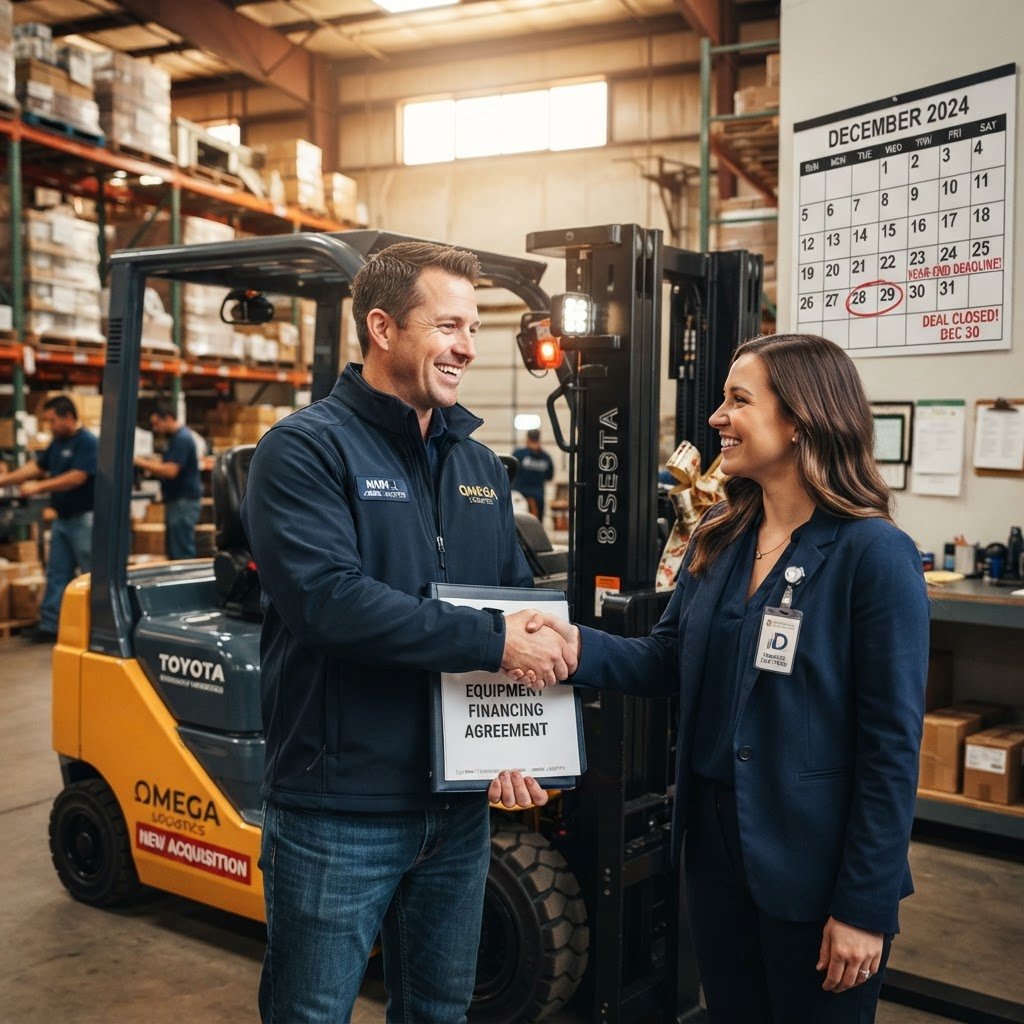
If you're running a business in 2026, you know that growth isn't just about having the best team or the flashiest office, it's about having the right tools at the right time. Whether you're a contractor in Phoenix needing a new excavator or a tech firm in Mesa upgrading your server stack, the "how" of acquiring that gear is just as important as the "what."
At Equipment Finance Academy, we see business owners get stuck on the same question every single week: "Should I lease this or just take out a loan?"
The answer isn't a simple "yes" or "no." It depends on your cash flow goals, your 2026 tax strategy, and how long you plan to keep that equipment in the dirt or on the desk. Let's break down the ultimate comparison between equipment leasing and business equipment loans so you can make a move that actually helps your bottom line.
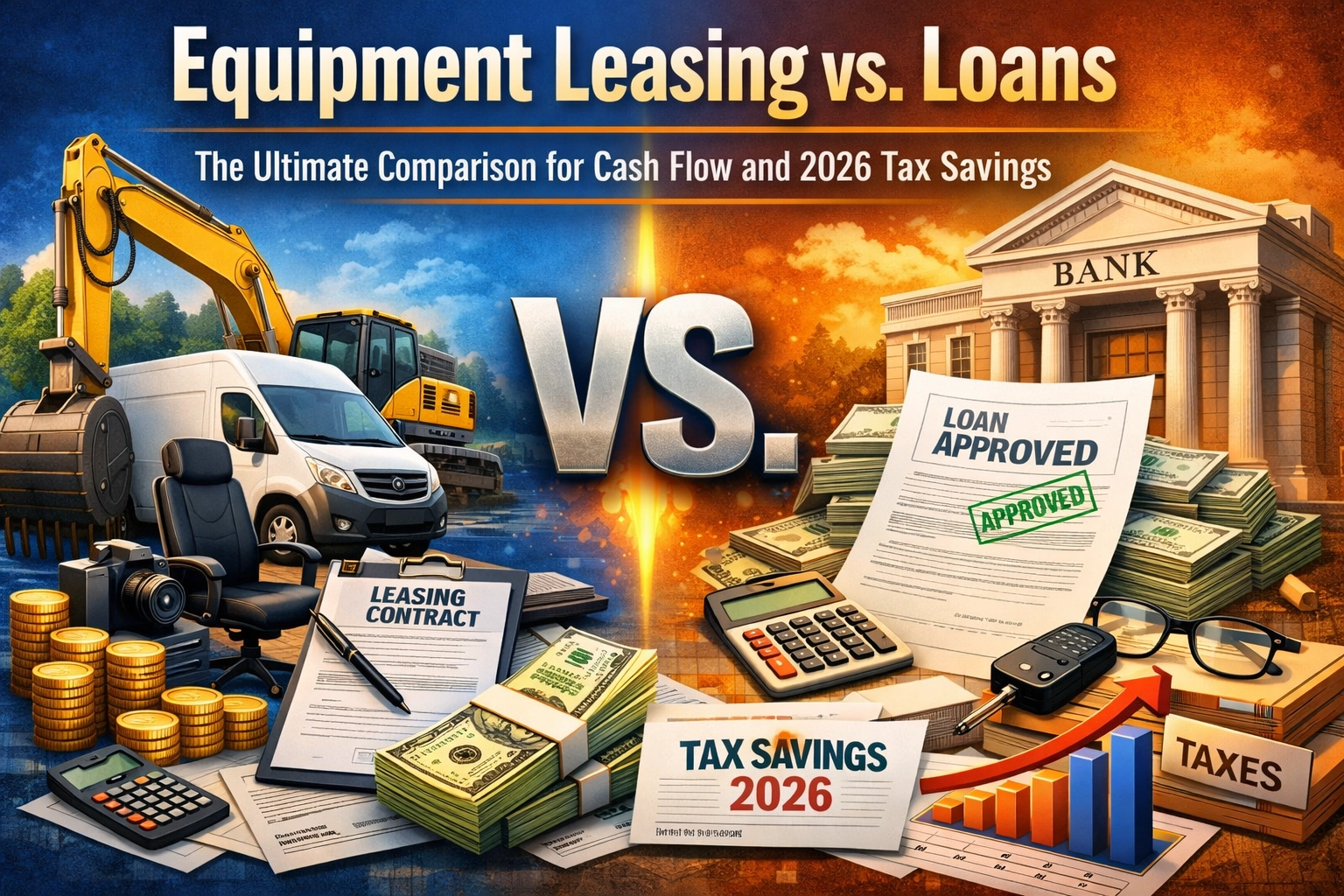
The Cash Flow Battle: Immediate Liquidity vs. Long-Term Equity
Cash flow is the lifeblood of any operation, from a small shop in Queen Creek to a massive enterprise in Tucson. When you look at equipment financing, you're essentially choosing how you want your bank account to look over the next 12 to 60 months.
The Case for Equipment Leasing
Leasing is the undisputed king of short-term cash flow. Why? Because it usually requires $0 or very little money down. Instead of dropping $50,000 on a piece of specialized machinery, you're looking at a manageable monthly payment that acts more like a utility bill than a debt.
- Preserve Working Capital: By leasing, you keep your cash in the bank for things like payroll, emergency repairs, or marketing.
- Lower Monthly Payments: Generally, lease payments are lower than loan payments because you aren't necessarily paying for the full value of the asset, you're paying for the use of it.
- Flexibility: When the lease is up, you can often trade in for the latest model. This is huge for industries where tech becomes obsolete every three years.
The Case for Business Equipment Loans
A business equipment loan is for the owner who wants to build equity. You're buying the asset, and the lender is just helping you get there.
- Ownership from Day One: You own the title. Once that last payment is made, the equipment is yours clear and free.
- No More Payments: Unlike a lease that might go on forever if you keep renewing, a loan has a finish line. Once it's paid, that equipment continues to generate revenue with zero monthly financing cost.
- Lower Total Cost: While the monthly payments might be higher, the total "cost to own" is almost always lower with a loan than a long-term lease.
If you're curious about how these numbers look for your specific situation, check out our rates page to see where the market stands today.
Navigating 2026 Tax Savings: What You Need to Know
Tax laws are always shifting, and in 2026, maximizing your deductions is the fastest way to see a return on your investment. The way the IRS views a lease versus a loan can mean the difference of thousands of dollars on your tax return.
Deductions for Equipment Loans
When you take out a loan to buy equipment, you typically look at three major tax benefits:
- Section 179 Deductions: This allows you to deduct the full purchase price of qualifying equipment in the year you buy it. For many businesses, this is the "holy grail" of tax breaks.
- Bonus Depreciation: If Section 179 is capped out, bonus depreciation allows you to recover the cost of the asset over time, providing a massive shield against your taxable income.
- Interest Deductions: The interest you pay on your business equipment loan is generally tax-deductible as a business expense.
Deductions for Equipment Leasing
Leasing simplifies your taxes. In most cases, your monthly lease payments are considered a pre-tax business expense. You simply deduct the payment each month. While this doesn't usually offer the massive "upfront" tax shield that Section 179 does, it provides a consistent, predictable deduction that keeps your taxable income lower throughout the year.
For a deeper dive into these strategies, our guides section has a ton of resources on how to prep your business for tax season.
Choosing the Right Path for Your Industry
Your choice between a loan and a lease often depends on what you're actually buying. Not all equipment is created equal.
When to Choose Leasing
- Technology & IT: If you're buying computers or software that will be "old news" in 24 months, don't buy it. Lease it.
- Medical Equipment: High-tech diagnostic tools evolve rapidly. Leasing allows you to stay at the cutting edge without getting stuck with an obsolete $100k machine.
- Short-Term Projects: If you have a 12-month contract in Phoenix that requires a specific crane you don't usually use, a lease-to-own or a short-term lease is your best friend.
When to Choose Business Equipment Loans
- Yellow Iron (Construction): Backhoes, dozers, and dump trucks are built to last decades. If the machine is going to be working for you ten years from now, you want to own it.
- Manufacturing: Heavy CNC machines and presses have long lifespans. Financing these allows you to build a strong balance sheet.
- Fleet Vehicles: For many businesses in the Mesa and Tucson areas, owning your delivery or service trucks makes more sense for long-term branding and resale value.
The "Hidden" Costs: Maintenance and Upkeep
One thing many owners forget to calculate is who is responsible for the gear when it breaks.
- With a Loan: You are the owner. If a hydraulic line blows, it's on your dime. However, you also have the freedom to modify the equipment however you want to fit your specific workflow.
- With a Lease: Depending on the type of lease (like an operating lease), the lessor might include maintenance packages. However, you are often restricted in how much you can modify the equipment, as it technically belongs to the leasing company.
Why Location Matters: The Arizona Advantage
Operating in the Southwest, specifically in the Phoenix-Mesa-Scottsdale corridor, presents unique opportunities. Our local economy is booming, but so is the competition. Being able to secure financing quickly can be the difference between winning a bid and losing it to a competitor who had their gear ready to go.
We have local roots in Queen Creek and Phoenix, meaning we understand the specific needs of Arizona business owners. Whether it's navigating local regulations or understanding the seasonal nature of work in Tucson, we're here to help you navigate the nuances of the 2026 market.
The Playbook: How to Decide in 3 Steps
If you're staring at a quote for new gear and aren't sure which way to turn, follow this simple playbook:
- Check Your Horizon: Will you still be using this equipment in 5 years? If yes, look at a loan. If no, lease it.
- Evaluate Your Cash: Do you have the 10-20% down payment for a loan without hurting your operations? If yes, a loan saves you money long-term. If no, a lease keeps you liquid.
- Talk to Your CPA: Ask them, "Based on our 2026 revenue projections, do we need a big Section 179 deduction right now, or are we better off with a monthly expense deduction?"

Final Thoughts: Equipment Financing as a Growth Tool
At the end of the day, equipment financing isn't just about debt: it's about leverage. It's a tool that allows you to take on bigger jobs, hire more people, and increase your revenue without draining your savings.
Whether you opt for the flexibility of a lease or the equity-building power of a loan, the goal is the same: putting the best equipment in your hands so you can do what you do best.
Ready to see what your options look like? You can apply online in just a few minutes, or if you still have questions, take a look at our FAQ page to get the straight talk on how we work.
Don't let your business get stuck in neutral because you're waiting for the "perfect" time to buy. In 2026, the perfect time is whenever you have the opportunity to grow. Let's get to work.
Equipment Finance Academy
Equipment financing specialist with years of experience helping businesses acquire the equipment they need to grow and succeed.