If you live in Ontario, you've probably spent the last decade hearing the same advice: "Get your real estate license." It was the gold standard for side hustles and career pivots. Everyone from your cousin to your barista was suddenly an "expert" in the GTA housing market.
But it's Friday, March 6, 2026, and the landscape has shifted. If you're still trying to break into real estate today, you're fighting an uphill battle against high interest rates, a stagnant housing supply, and a market that is increasingly difficult to navigate for newcomers.
Meanwhile, a different kind of opportunity is quietly exploding across the Guelph-Toronto corridor. It doesn't involve showing houses at 9:00 PM on a Sunday, it doesn't require a grueling licensing exam, and the commissions can hit $10k to $25k on a single transaction.
Welcome to the world of equipment finance brokering. Here is why this is the ultimate Ontario side-hustle for 2026 and why it's beating real estate in almost every category.
The Real Estate Reality Check: High Rates and The "Grind"
Let's look at the facts. In 2026, the Ontario housing market isn't what it used to be. High interest rates have become the "new normal," which has cooled the frantic bidding wars we saw in the early 2020s. For a real estate agent, this means deals take longer to close, buyers are more hesitant, and your income becomes wildly unpredictable.
Then there's the lifestyle. Being a real estate agent is often sold as "freedom," but the reality is often the opposite. You are at the beck and call of your clients. If a buyer wants to see a semi-detached in Brampton on a rainy Tuesday night, you're there. If a deal falls through because of a home inspection at the last minute, weeks of work go down the drain.
In contrast, equipment brokering is a B2B (business-to-business) game. You work during business hours. You deal with business owners who are making logical, data-driven decisions rather than emotional ones. When a construction company in Milton needs a new fleet of excavators, they aren't worried about the "vibes" of the machine, they're worried about the ROI.
The 81% Surge: Where the Money Is Moving
While the residential housing market is catching its breath, the industrial and commercial sectors in Ontario are on fire. Recent data shows an 81% boom in construction and lab sectors across Southern Ontario.
Businesses are expanding. Tech labs in the Toronto-Waterloo tech corridor are scaling up. Construction firms are winning massive infrastructure contracts. All of these businesses share one common problem: they need expensive equipment to do the work, and they often don't want to tie up all their cash to buy it.
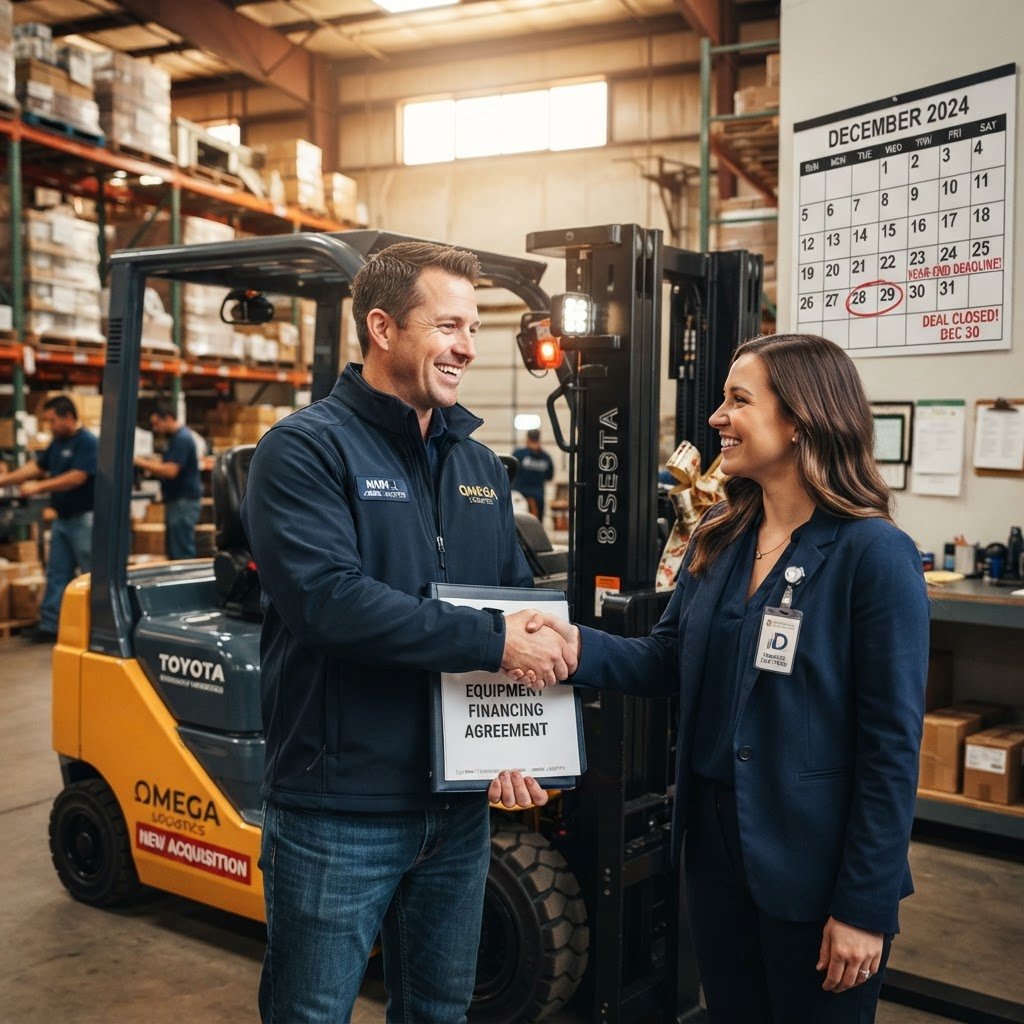
This is where you come in. As an equipment finance broker, you help these companies secure the capital they need to grow. Whether it's a $200,000 piece of medical diagnostic gear or a $500,000 crane, you are the bridge between the business and the lender.
Learn more about the $841 billion equipment finance industry
No License, No Problem: The Low Barrier to Entry
One of the biggest hurdles to starting a real estate career in Ontario is the RECO (Real Estate Council of Ontario) licensing process. It costs thousands of dollars in courses and insurance fees before you can even earn your first dollar. And if you don't maintain your continuing education? You lose the right to work.
Equipment finance brokering is different. In Ontario, you do not need a specific "broker license" to facilitate commercial equipment leases and loans. This significantly lowers the risk for anyone looking for a side hustle. You don't have to quit your day job to spend six months in a classroom. You can start learning the ropes, building your network, and closing deals on your own time.
At the Equipment Finance Academy, we teach you the exact frameworks to navigate this industry without the regulatory headaches that plague the real estate world.
The Remote Lifestyle: From Your Laptop to the Bank
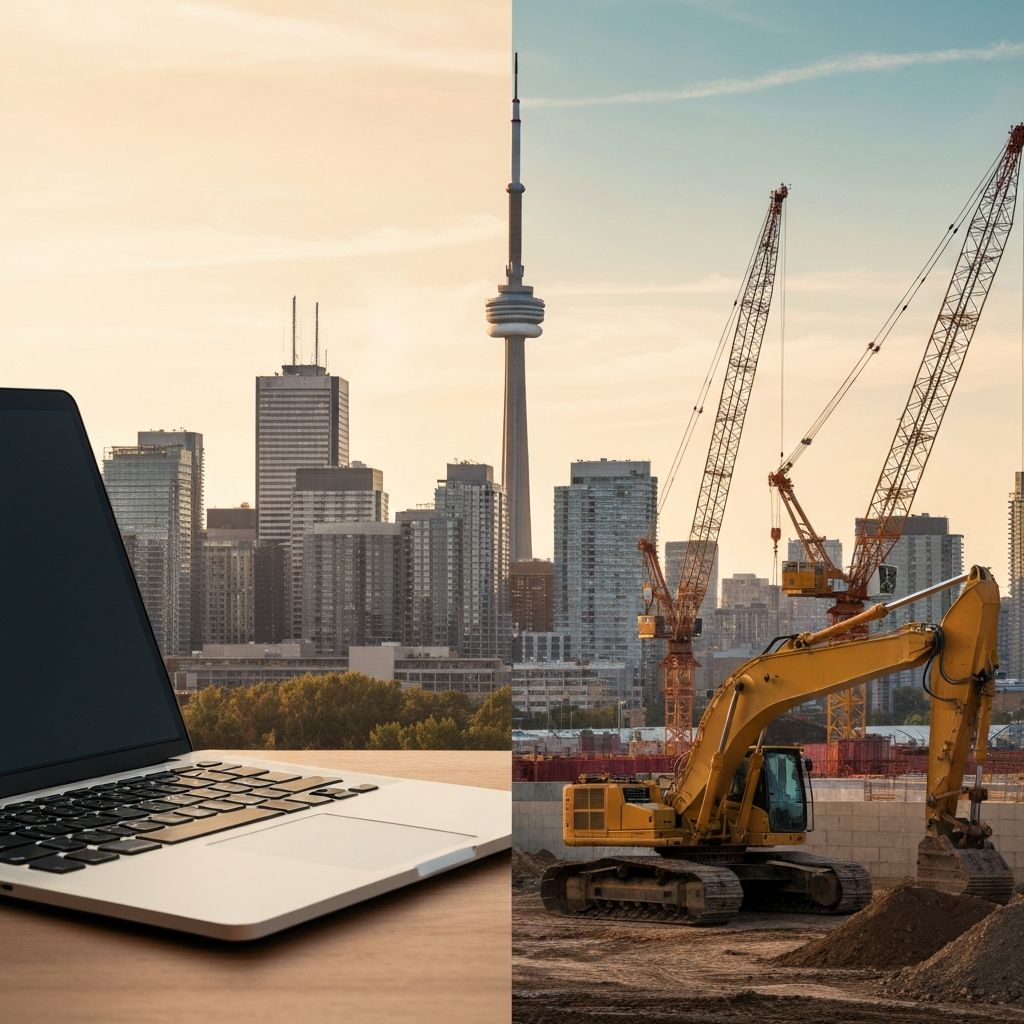
Imagine running your business from a coffee shop in Guelph or your home office in Ottawa. You don't need to drive across the province to meet clients in person. In 2026, 95% of equipment finance deals are done digitally.
You find a lead, you gather the application documents via email, you submit them to your lending partners, and you get paid. It is a "laptop lifestyle" business in the truest sense.

When you compare this to the "windshield time" of a real estate agent, driving from listing to listing, sitting in traffic on the 401, the choice becomes obvious. Brokering allows you to scale your income without scaling your stress or your gas bill.
The Math: $10k+ Commissions are the Standard
Let's talk about the money. In real estate, you're often splitting a commission with your brokerage, the other agent, and sometimes a referral fee. On a $800,000 condo, after all the splits and expenses, you might walk away with a fraction of what you expected.
In equipment finance, the commission structure is transparent and highly lucrative. A typical broker might earn between 2% and 10% of the total deal size, depending on the complexity and the lender.
- Finance a $250,000 specialized lab asset? That could be a $12,500 commission.
- Finance a $500,000 construction fleet? You're looking at $25,000+.
The best part? These deals often close much faster than a home sale. A real estate transaction can drag on for 60 to 90 days. An equipment lease can be approved and funded in as little as 48 hours.

Why 2026 is the Year of Market Consolidation
Research into the 2026 Canadian market shows significant consolidation. Major banks are shifting their focus, often leaving small and medium-sized businesses (SMBs) behind. This creates a massive "funding gap."
When a bank says "no" to a local Ontario business owner, that owner doesn't stop needing the equipment. They just need a creative solution. As a broker, you have access to private lenders, independent finance houses, and alternative structures like sale-and-leasebacks.
A sale-and-leaseback is a powerful tool where a business sells the equipment they already own to a lender to unlock cash flow, then leases it back. In an era of business uncertainty, being the person who can provide "liquidity" makes you the most valuable person in the room.
Explore the opportunities in equipment finance
Comparing the Two: Side-Hustle Showdown
| Feature | Real Estate Agent (Ontario) | Equipment Finance Broker |
|---|---|---|
| Licensing | Required (RECO), expensive, and time-consuming. | None required for commercial brokering. |
| Hours | Nights, weekends, and holidays. | Standard business hours (9-5). |
| Location | Must be physically present for showings. | 100% remote/laptop friendly. |
| Market Condition | Struggling with high interest rates. | Booming (81% growth in key sectors). |
| Commission | Large, but split many ways; slow payout. | High ($10k-$25k), no splits; fast payout. |
| Risk | High (marketing costs, desk fees). | Low (minimal overhead). |
How to Get Started in Ontario
If you're tired of the real estate grind, or if you've been sitting on the sidelines waiting for the "perfect" side hustle, the time to act is now. The industrial boom in Ontario isn't going to wait.
You don't need a background in finance. You don't need a suit and tie. What you need is a system. At Equipment Finance Academy, we've built the roadmap to help you transition from zero to your first $10k commission.
We cover everything:
- How to find high-value equipment leads in Ontario.
- How to "speak the language" of business owners.
- How to submit deals to lenders so they get approved.
- How to structure your business for maximum tax efficiency and remote freedom.
The 2026 economy rewards those who provide solutions to businesses, not those who chase the same over-saturated residential markets.

Ready to build a real business that doesn't require showing houses on your day off?
Explore our resources and see how you can tap into the $841 billion equipment finance industry today.
Equipment Finance Academy
Equipment financing specialist with years of experience helping businesses acquire the equipment they need to grow and succeed.