Key Takeaways
- 1Rental inventory financing funds the equipment you rent out to customers, with the fleet itself serving as collateral
- 2Payments are structured around rental revenue, so new units can pay for themselves as utilization ramps up
- 3Financing lets rental yards scale to meet seasonal and project-driven demand without draining cash reserves
- 4Track utilization rate and revenue-per-unit to know exactly when adding another machine pays off
- 5Depreciation and Section 179 can offset a significant portion of your fleet's first-year cost
What Is Rental Inventory Financing?
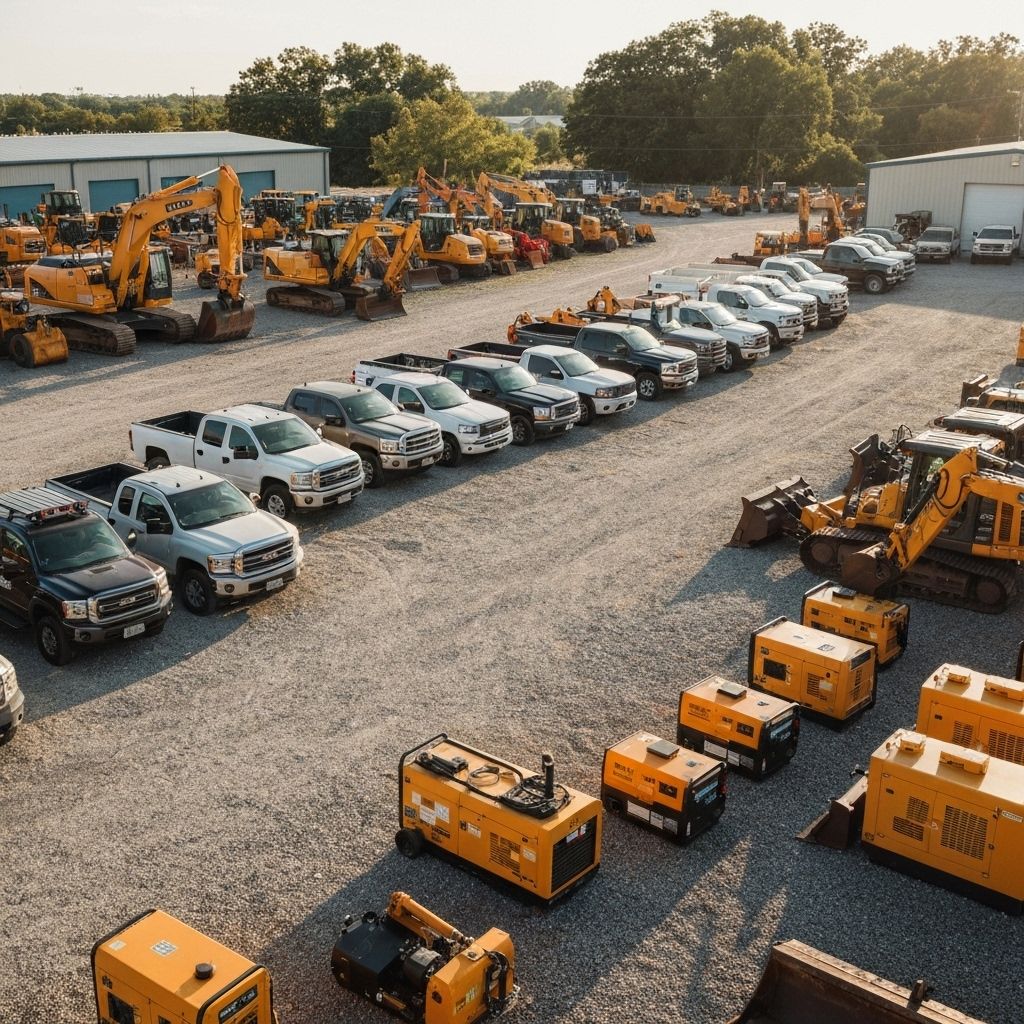
Rental inventory financing is a specialized form of equipment financing built for businesses whose product is the equipment: tool rental yards, party and event rental companies, aerial and heavy-equipment rental fleets, and A/V or medical rental operations. Instead of financing a machine you'll use in your own operations, you finance an asset that generates rental income, and the equipment itself serves as the collateral.
This matters because rental businesses live and die by fleet size and mix. Every unit sitting on the yard is potential revenue, and every "sorry, we're out of that" is money walking out the door to a competitor. Financing turns fleet growth from a cash-flow problem into a revenue opportunity.
How Rental Inventory Financing Works
A lender provides capital to purchase equipment you'll add to your rental fleet. Because the financing is underwritten around the equipment's revenue-generating potential, payments can often be aligned with expected rental income rather than a rigid flat schedule. As each unit gets rented and generates cash flow, that income services the debt, so a well-utilized machine effectively pays for itself.
A simple example: a $40,000 scissor lift financed over 48 months might carry a payment near $950/month. If that unit rents for $600/week at even 50% utilization, it generates roughly $1,300/month, covering the payment and contributing margin from day one.
Benefits for Rental Companies
- Expand the fleet without depleting reserves, keeping cash free for maintenance, staffing, and your yard
- Respond fast to demand spikes, whether it's storm season, a big local construction boom, or event season
- Diversify your offering so customers can one-stop-shop and rent more per visit
- Predictable payments that make it easy to model ROI on each new unit
- Tax advantages, including depreciation deductions and potential Section 179 treatment on purchased units
The Metrics That Make (or Break) the Decision
Before financing another unit, look at two numbers. Utilization rate tells you what percentage of available days your existing units are actually on rent; consistently above 70% is a strong signal you're leaving revenue on the table and should add capacity. Revenue per unit tells you how quickly a new machine will cover its payment. When a class of equipment is regularly booked out, financing another unit is one of the highest-return moves a rental business can make.
How to Qualify
Lenders will look at your time in business, personal and business credit, and ideally your fleet utilization and rental revenue history. Established rental companies with strong utilization often secure favorable terms because the collateral has a proven, liquid resale market. Newer operators can still qualify, typically with a modest down payment or by starting with high-demand, easy-to-remarket equipment.
Conclusion
Rental inventory financing is one of the most powerful growth levers available to an equipment rental business. By funding fleet expansion with revenue-aligned payments, watching utilization and revenue-per-unit, and capturing the available tax benefits, you can meet demand, diversify your offering, and build a more profitable yard, without betting the bank account on it. Estimate a new unit's payment with the calculator below and get pre-qualified in minutes.
Frequently Asked Questions
Jennifer Martinez
Equipment financing specialist with years of experience helping businesses acquire the equipment they need to grow and succeed.